
 EN-US
EN-US  TR-TR
TR-TR 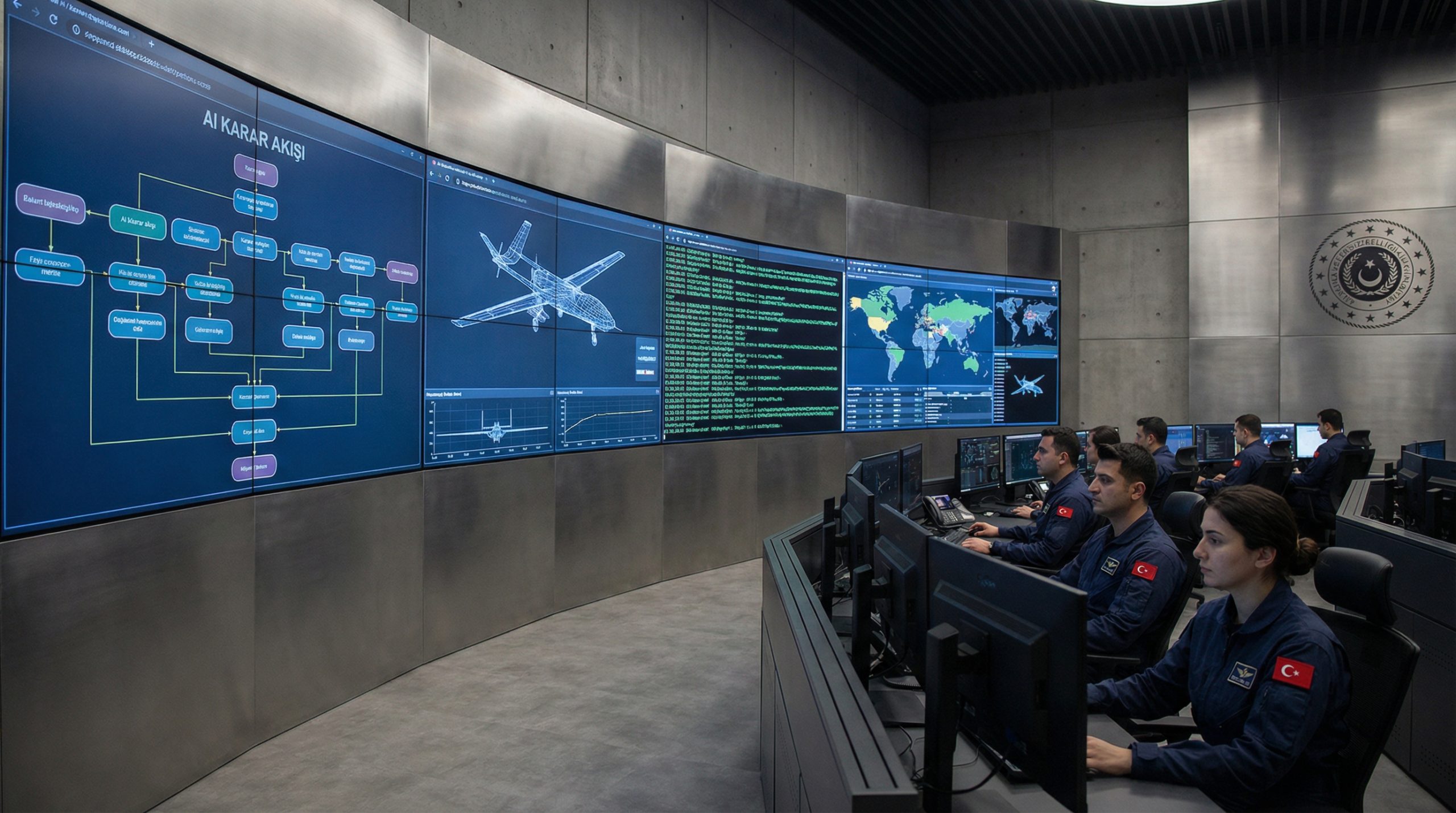
Türkiye’s defense sector is entering 2026 with an unprecedented push towards AI-driven and autonomous military systems, placing legal and compliance frameworks under scrutiny. The government’s 2026 Annual Program explicitly identifies artificial intelligence (AI) and autonomy as core to defense modernization. This strategic shift is rapidly introducing AI-enabled weapons, drones, and decision-support systems into military service. However, these cutting-edge platforms arrive in a legal environment not originally designed for self-learning algorithms or machine autonomy. Traditional procurement laws, certification standards, contract clauses, and liability rules are being tested and reshaped by the complexities of AI. In this advisory overview, we examine how Turkish defense programs’ embrace of AI in 2026 is exposing regulatory uncertainty, straining oversight mechanisms, and prompting new approaches to risk allocation and accountability.
Procurement Law Under Pressure:
Turkey’s defense procurement process has long operated under special rules that favor confidentiality over openness. By law, many defense and security acquisitions bypass the general Public Procurement Law on grounds of national security. Deals are often struck through closed, classified tenders with minimal public information. This opaque framework, while guarding secrets, now collides with the novel risks of AI procurement. When acquiring an AI-enabled system – for example, an autonomous drone swarm or AI-powered surveillance network – the usual checks and balances are limited. External oversight is tightly restricted, as defense contracts and budgets are treated as state secrets. This secrecy makes it harder to evaluate whether AI systems meet ethical and performance expectations. It also undermines accountability for AI-related decisions, since independent reviewers (Parliament or auditors) have scant access to procurement records. In 2026, Turkish authorities recognize these gaps. The Presidential Annual Program calls for a formal AI risk assessment system and certification process in public institutions. Such measures signal an attempt to update procurement governance – ensuring that when SSB (Presidency of Defense Industries) buys an AI-driven platform, there are frameworks to assess algorithmic risks, safety, and compliance. Nonetheless, until these new oversight tools mature, procurement law faces a tension: the need for agility and secrecy in defense deals versus the demand for transparency and diligence that AI technology necessitates.
Challenges in Certification and Standards:
Once an AI-equipped defense product is developed, how to certify its safety and reliability remains a pressing question. Traditional military certification standards focus on hardware performance and fixed software behavior, but AI systems can learn, adapt, or behave unpredictably. Türkiye’s defense agencies have well-established testing regimens for jets, tanks, or missiles – yet no established protocol fully covers AI autonomy. This gap is apparent in areas like autonomous targeting and decision-making. For example, the Bayraktar Kızılelma unmanned fighter, tested in late 2025, showcased AI-enhanced combat capabilities (detecting and locking onto a fighter jet autonomously). While a milestone in technology, it underscores the certification dilemma: How do authorities validate that such an AI will consistently distinguish friend from foe or comply with rules of engagement? Current Turkish defense standards provide no clear criteria for algorithmic decision quality, continuous learning effects, or fail-safe mechanisms in autonomous modes. The Turkish Standards Institute (TSE) has started aligning with international AI standards like ISO/IEC 42001, but applying these to defense systems is nascent. Researchers globally warn that AI-enabled military systems demand new testing methods to prevent undesirable outcomes such as fratricide (friendly-fire) or errant behavior. In Türkiye, this translates into a compliance gap – legacy military certifications may not catch an AI system’s edge-case failures. As a result, 2026 is seeing Turkish defense stakeholders push for updated guidelines. There is discussion of “meaningful human control” principles and autonomous system trials under controlled conditions, but formal standards lag behind technology. This gap exposes contractors to unclear acceptance criteria: they must deliver AI systems without definitive benchmarks for pass/fail, raising legal questions if a system underperforms in the field.
Risk Allocation and Contractor Liability:
Contracts for defense projects traditionally contain detailed risk allocation clauses – covering issues like delays, defects, or performance shortfalls. With AI in the mix, these clauses are under new strain. Who bears liability if an autonomous system makes a lethal mistake or a hidden algorithmic bias causes mission failure? The law in Türkiye has not yet carved out special rules for AI in defense, meaning general contract and tort principles apply. Contractors and the government thus must negotiate how to allocate unprecedented risks. In practice, Turkish defense contracts are starting to include bespoke provisions on AI. Lawyers report that indemnity, warranty, and liability limitation clauses are being adapted to address AI-related hazards. For instance, a contractor might warrant that an AI-driven targeting software has been trained on non-discriminatory data (to reduce collateral damage risk), or a contract may limit the contractor’s liability for unpredictable battlefield decisions made by an autonomous system. Yet such clauses face enforceability tests. If an AI malfunction leads to a friendly-fire incident, will Turkish courts treat it like a product defect, or will they defer to the “government contractor” defense given the sovereign context? This remains untested in 2026 – no Turkish case law directly addresses AI defense mishaps. Under the general Turkish Code of Obligations and product safety laws, manufacturers (contractors) can be held strictly liable for defective products causing harm. A lethal autonomous drone that erratically causes civilian damage could trigger claims under these general doctrines. Contractors therefore face a dilemma: their exposure to liability may increase, unless contracts clearly allocate such risks to the government or exclude unforeseeable AI behavior as force majeure. The absence of specific legislation on autonomous weapons means parties must rely on contract language and analogies to existing law. Savvy contractors are seeking to include robust risk-sharing provisions, and insurers are watching closely – though insurance coverage for AI risks is still in its infancy. As 2026 progresses, we may see more explicit government indemnities or statutory shields for defense AI developers to encourage innovation without crippling litigation fears.
Regulatory Uncertainty for AI Platforms:
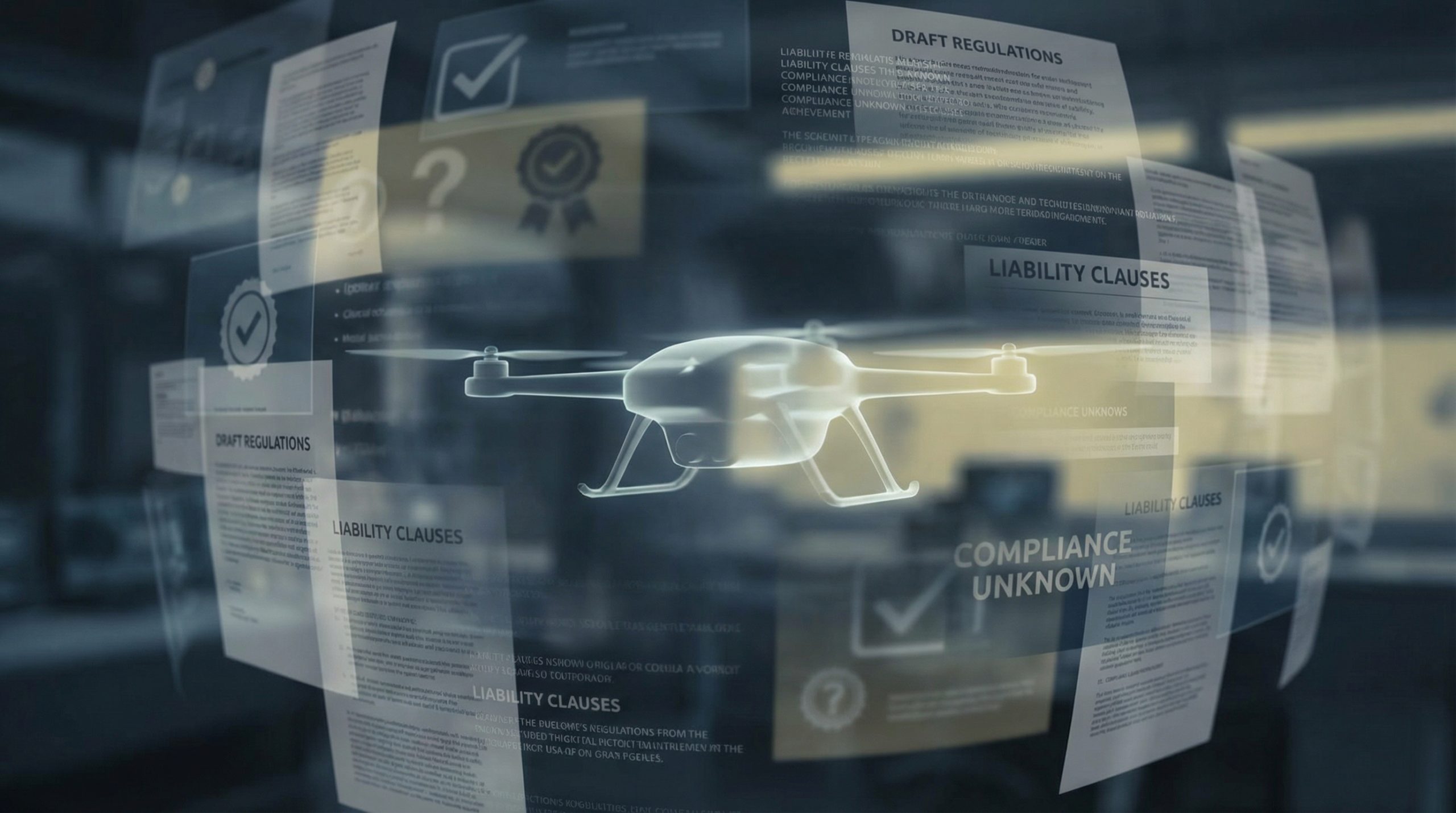
The regulatory landscape for AI in Türkiye is still taking shape, which leaves defense contractors and subcontractors navigating significant uncertainty. Unlike in some sectors (finance or data privacy), there is no dedicated AI regulator or comprehensive AI law in force as of early 2026. The government’s National AI Strategy 2021–2025 outlined high-level ethical principles, and a draft AI law was introduced in 2024 (with further amendments proposed in late 2025). However, these efforts largely target civilian uses of AI – focusing on data protection, online content, and consumer safety – and notably exclude national security systems. Indeed, global trends (such as the EU’s AI Act) often exempt military AI from civilian regulations, and Turkey appears to follow suit. The result is a grey zone for defense contractors: standard laws on software, product safety, and privacy apply, but no specific statute tells an SSB vendor how to ensure an autonomous tank’s AI is legally compliant. Contractors must interpret broad mandates (like avoiding discriminatory AI under general data protection rules) in a defense context without official guidance. Moreover, subcontractors – often providing AI components or algorithms – face unclear obligations. Should a subcontractor certify that its AI module won’t learn beyond its remit or that it allows human override? Such questions lack clear answers under current Turkish law. The Presidency of Defense Industries (SSB) has authority to impose contractual requirements and has begun inserting AI governance expectations in R&D project scopes, but these are policy-driven rather than based on enacted law. This uncertainty is compounded when foreign partners are involved. A foreign AI software provider must comply with Turkish export controls and possibly U.S. or EU sanctions regimes, all while fitting into Turkey’s opaque defense procurement rules. In short, contractors in 2026 are operating in a regulatory vacuum for defense AI – making compliance a moving target. They mitigate this by proactive engagement with SSB, seeking informal guidance, and staying alert to forthcoming secondary regulations. Notably, Ankara’s draft AI legislation envisions future “high-risk AI” rules, and although military projects aren’t explicitly covered, the writing is on the wall that more regulation is looming. Until then, companies must lean on general principles of reasonableness and documented due diligence to show they took precautions with AI – a prudent stance should any dispute or investigation arise.
Gaps in Military Certification and Testing:
Beyond legal statutes, military certification and testing protocols are facing a reality check. Autonomous and AI-driven defense systems challenge the assumption that a weapon behaves predictably according to its design specifications. For decades, Turkish defense procurement relied on rigorous trials – live-fire tests, field trials, compliance with technical specs – before accepting a system into service. Yet an AI system’s performance can evolve with new data or in novel environments. This raises a compliance conundrum: a system might pass initial acceptance tests, but how to assure it stays safe and effective over time? No clear military-standard exists for continuous validation of AI behavior. For instance, if a contractor delivers an AI-enabled missile defense software, SSB’s testing team can verify it intercepts known targets under set conditions. But if that AI later encounters a completely new type of threat or if its machine-learning component updates its target classification, the original certification may no longer guarantee real-world behavior. Turkey’s defense industry insiders acknowledge this gap. Some have called for iterative certification – akin to periodic audits or re-testing at intervals – especially for systems with adaptive algorithms. There are also potential gaps in safety certification: How to certify an autonomous vehicle’s decision logic as “safe” when ethical decisions (life-and-death target choices) are involved? These issues are leading to proposals for hybrid approaches: keeping a “human in the loop” for certain high-risk functions (a principle echoed in Turkey’s draft AI guidelines requiring human oversight for high-risk AI decisions) and demanding that contractors provide transparency into their AI models. Still, in 2026 these are mostly ad-hoc measures. The Presidency of Defense Industries’ oversight department and the military end-users lack a formal checklist for AI compliance. This gap not only creates uncertainty for contractors (who wonder what testing evidence to prepare), but also poses a latent legal risk: if an incident occurs, any evidentiary gaps in testing could be argued as negligence. In essence, the testing standards are playing catch-up – and until Turkey institutes clear certification protocols for AI (potentially via the SSB’s own AI strategy work or TSE standards adoption), both industry and regulators must rely on general engineering judgment and case-by-case scrutiny to fill the void.
Oversight, Audit, and SSB’s Dilemma:
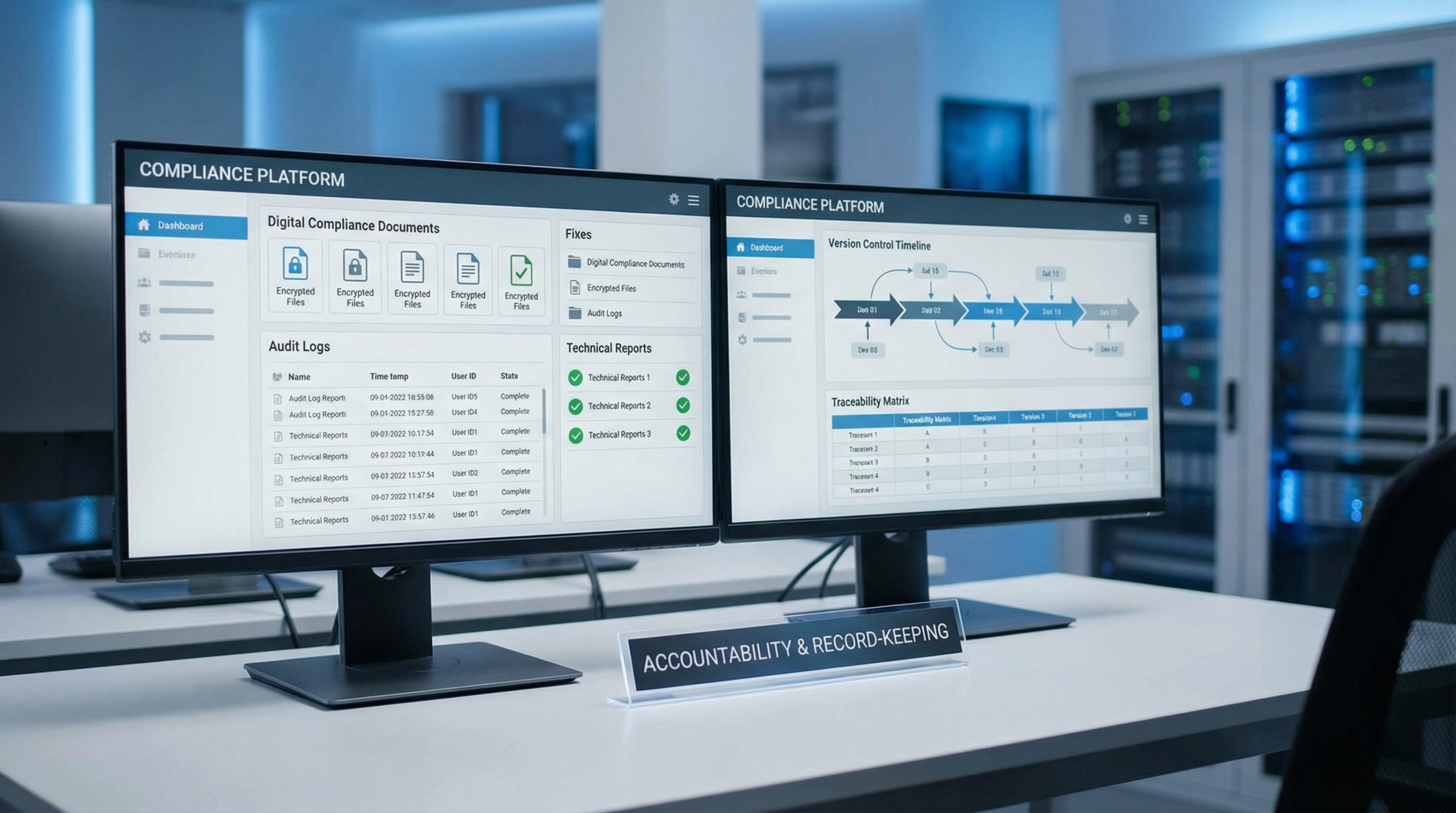
The Presidency of Defense Industries (SSB) sits at the heart of defense procurement and is now tasked with overseeing AI-laden projects that even their experts may find opaque. The traditional oversight model in Turkey’s defense sector has well-known weaknesses: limited transparency and minimal external audit. Defense projects often proceed with only cursory parliamentary scrutiny, and detailed audit reports are classified away from public eyes. In this environment, compliance oversight relies heavily on SSB’s internal controls and contractor cooperation. AI systems exacerbate oversight challenges. Unlike a tank or rifle, an AI’s “compliance” cannot be observed physically – it lies in training data quality, algorithmic thresholds, and code integrity. Does SSB have the capacity to audit an algorithm for biases or hidden functionalities? Likely not fully, at least not yet. This raises concern within the Turkish defense establishment about performance assurance and governance. One emerging focus is on requiring contractors to implement robust audit trails and reporting for AI systems. Turkish defense contracts in 2026 are beginning to oblige companies to provide access to AI training documentation, simulation results, and even source code escrow for critical algorithms, so that the SSB (or a third-party) can inspect issues if something goes awry. The Annual Program’s call for an AI management and certification system hints that the state will develop better oversight tools. Moreover, internal oversight bodies are adapting: SSB has set up an “AI Platform” or cluster within its organization to concentrate expertise, and there are proposals to create a dedicated Uncrewed Systems Command within the military to coordinate autonomous systems usage and oversight. These initiatives show recognition that new oversight architectures are needed. In the interim, however, compliance officers in defense firms must grapple with ambiguity. They face audits that are not yet standardized – one project might be asked for an AI ethics review, another might not. They also face the risk of after-the-fact oversight: if an AI system fails in deployment, SSB or the military might retroactively scrutinize the contractor’s development process, leading to potential disputes over whether the contractor met an undefined standard of care. Until SSB formalizes how it will oversee AI (possibly via guidelines or updated contract requirements in 2026), both the authority and contractors tread uncertain ground. The prudent approach for companies is to document everything – from risk assessments to bias testing – even if not expressly required, to demonstrate a culture of compliance in case of later inquiry.
Policy Shifts and Future Litigation Risk:
Turkey’s policy direction in 2026 is unambiguous: it aims to harness AI as a strategic asset in defense. High-profile projects – from autonomous drones to AI-enhanced cyber defenses – enjoy top-level political backing and generous budgets. This enthusiasm, however, does not eliminate legal risk; in fact, it heightens the need to clarify enforceability of obligations and anticipate disputes. As AI permeates defense contracts, some terms that once seemed standard are becoming harder to enforce. Take performance guarantees: a contractor might guarantee that a radar system achieves X detection range, which is straightforward. But if part of that system is an AI filter that dynamically adjusts to minimize false alarms, can the contractor be held in breach if the AI behaves differently in unforeseen scenarios? Similarly, warranty and support obligations are tested when the “product” can evolve. If an autonomous vehicle’s control AI requires regular retraining to stay effective, does the failure to update it implicate the contractor’s warranty, or is it the military’s responsibility under maintenance obligations? Such questions could lead to contractual disputes or litigation if not addressed upfront. Turkish defense contracts will likely evolve to include clauses on software updates, algorithmic maintenance, and data-sharing for AI improvement – a trend starting to appear in 2026 R&D agreements. Additionally, the government’s push for AI might invite future product liability or even criminal liability cases in extreme events. For example, in a hypothetical accident where an autonomous combat drone mistakenly targets an ally or civilian, aggrieved parties might look for accountability. While direct litigation against the state is limited by sovereign immunity in many cases, contractors and manufacturers could find themselves in court. Turkish law today would treat such a claim under general tort principles – was the system defective or negligently designed? – but judges would be wading into uncharted territory. The absence of precedent means litigation risk is largely speculative but real. Notably, legal scholars debate whether an AI developer’s duty of care should be assessed differently given the autonomous aspect. Until courts or lawmakers clarify this, every new AI deployment carries a latent risk of becoming a test case. Contractors, therefore, must view compliance not just as meeting current rules, but as creating a defensible record if something goes wrong. Ensuring traceability of AI decisions (for instance, logging the AI’s decision process) and offering fail-safes (like manual override options) are not just good practice but legal risk mitigators. The Turkish authorities, too, have a stake in preempting problems: the Presidency of Defense Industries and military leaders will want to avoid the embarrassment and fallout of an AI-related mishap. This could lead to more conservative rules of engagement for autonomous systems (requiring human confirmation for lethal action) and more explicit contractor obligations to follow evolving ethical guidelines. In sum, the policy embrace of AI is forcing everyone to re-think obligations and liabilities. Those in the defense industry in Türkiye should stay alert to new contract templates and regulatory guidance emerging throughout 2026, as each is an attempt to clarify the blurring lines of accountability introduced by AI.