
 EN-US
EN-US  TR-TR
TR-TR Türkiye’s Defense Spending Soars to Record Levels
Türkiye’s defense budget has surged dramatically in recent years, reaching all-time highs as Ankara prioritizes military modernization and self-reliance. The 2026 budget allocates 2.15 trillion lira (about $27.3 billion) to defense and security – a 33.9% increase over 2025. This sustained rise aligns with NATO’s post-Ukraine push for greater spending, with allies even eyeing a 5% of GDP defense goal by 2035. Türkiye’s defense outlays are on track to hit roughly 3.2% of GDP by 2028, up from 2.33% in 2026. Crucially, much of this new funding is fueling multi-year programs rather than one-off purchases. In fact, the number of active defense projects has exceeded 1,000, with a total value approaching $100 billion by 2025 – a clear indicator that record budgets are being converted into long-term commitments, not short-term splurges.
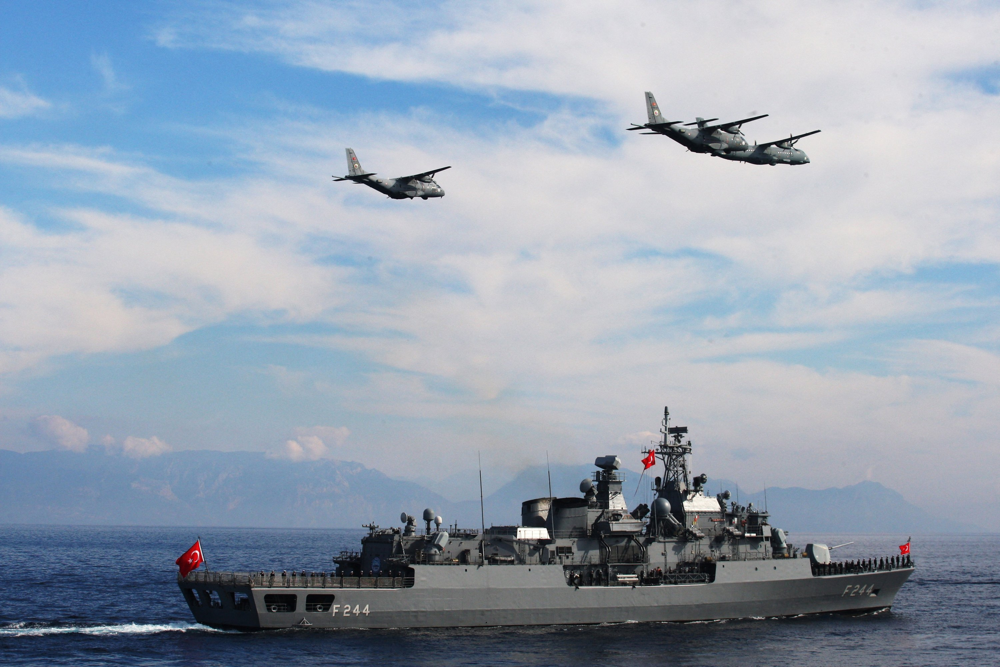
This budget boom has given Türkiye’s procurement authorities the financial latitude to plan years ahead. Annual budget approvals now come with an expectation of multi-year appropriations for key programs, meaning Parliament and the Ministry of Finance anticipate funding projects over multiple fiscal years. Such long-term funding stability was not always guaranteed in Türkiye’s past, especially amid economic volatility. But today, Ankara’s political and economic leadership has explicitly tied defense spending to strategic deterrence and industrial growth, ensuring that big-ticket programs won’t be left stranded by year-to-year budget whims. The result is a fundamental shift in how contracts are structured and enforced under the Presidency of Defense Industries (SSB) – Türkiye’s defense procurement and industry oversight agency. SSB can now enter into large, legally binding contracts spanning 5–10 years, confident that funding will materialize in future budgets. For defense contractors, this new landscape brings both opportunities and obligations: opportunities in the form of guaranteed production orders for years to come, and obligations in the form of stricter performance and industrial participation requirements.
Multi‑Year Contracts and Mega-Programs Reshaping Procurement
Armed with record budgets, Türkiye is advancing mega-projects through innovative contracting models. A prime example is the “Steel Dome” air defense initiative – an ambitious, multi-layered system of radars, command networks, and interceptors intended to shield Turkish skies. In late 2025, SSB signed $6.5 billion worth of contracts with leading local defense firms to kick-start Steel Dome’s deployment. Rather than a single one-off deal, these are framework contracts under the Steel Dome umbrella, coordinating a portfolio of projects (from short-range missiles to long-range sensors) over several years. Officials noted that decisions made by the Defense Industry Executive Committee were being “systematically converted into contracts,” ensuring no time is lost between high-level approval and binding agreements. In practice, this means companies like Aselsan, Roketsan, and Havelsan have locked in multi-year production orders that extend well into the late 2020s.
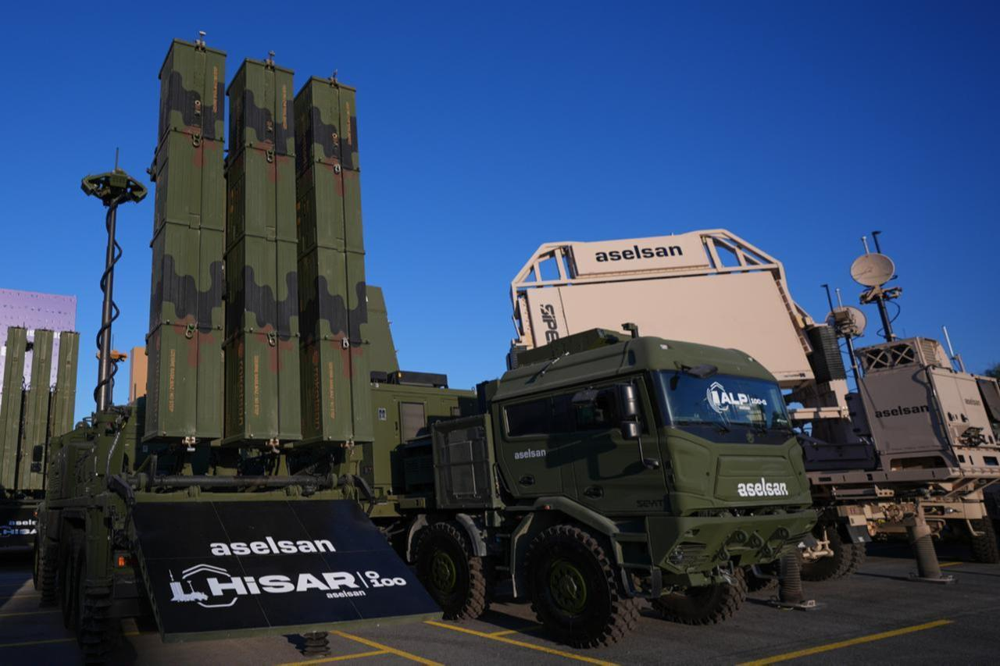
Notably, Aselsan – Türkiye’s defense electronics giant – received sequential contracts in 2025 to build Steel Dome elements through 2030 and beyond. An initial agreement worth €1.65 billion set delivery schedules from 2027 to 2031, and a second €1.12 billion contract extended production from 2027 through 2030. Together, these deals will keep assembly lines rolling for the next 5–7 years, illustrating how multi-year procurement is becoming the norm. Such contracts resemble the U.S. Department of Defense’s Multiyear Procurement (MYP) model, wherein a single contract covers several years’ worth of orders to stabilize production and reduce costs. The benefit is a “clear demand signal” to industry, allowing firms to plan workforce and supply chains more efficiently. In Türkiye’s case, multi-year contracts for programs like Steel Dome also help indigenize technology by guaranteeing a home market for new systems (e.g. Hisar and Siper air defense missiles) for the next decade. If the government were to cancel such a contract mid-stream, it could face significant penalties or sunk costs – a fact that underscores Ankara’s commitment to follow through, much as the U.S. government accepts cancellation liability on its multiyear contracts.
Türkiye’s naval and aerospace sectors are likewise being transformed by long-horizon programs. The Turkish Navy currently has 31 warships under construction or on order, including new frigates, destroyers, submarines, and its first light aircraft carrier. These projects, such as the MILGEM corvettes and TF-2000 air-defense destroyers, are often contracted as series or batches spanning many years of continuous production. By funding multiple ships in a class through a unified plan, SSB and the Navy can negotiate better terms and ensure consistent work for domestic shipyards. Similarly, Türkiye’s indigenous fifth-generation fighter KAAN (formerly TF-X) and advanced drone programs (Bayraktar TB3, Kızılelma, etc.) are structured as multi-year development and production efforts rather than ad hoc purchases. Long-term framework agreements with primes like Turkish Aerospace Industries set out phased milestones for prototype, testing, and serial production of these aircraft, with the Air Force budgeting now for aircraft that will only be delivered in the late 2020s. This approach reshapes risk allocation: contractors gain assured business for the long run but are also bound to deliver on schedule across all phases of the program. Any delays or cost overruns risk jeopardizing not just one contract but a cascade of future orders. In response, contractors are bolstering project management and adopting more robust risk mitigation, knowing that SSB’s patience for schedule slips may be limited when multi-year national projects are at stake.
From a contract structuring standpoint, Türkiye’s new deals often resemble umbrella framework contracts with defined scope and options for incremental deliveries. For example, a single agreement might outline the baseline requirement (say, a minimum number of ships or missiles) and then include options or follow-on phases for additional units if performance targets are met. This balances flexibility with commitment: the government secures a price and capacity for the full program, while retaining mechanisms to adjust or halt future tranches if needed (without having to renegotiate from scratch). The Steel Dome contracts explicitly cover serial production through set periods, essentially functioning as multi-year requirements contracts that keep factories running at a steady pace. Likewise, recent naval contracts – such as Aselsan’s €225 million deal with the military shipbuilding company ASFAT for combat systems – schedule deliveries from 2026 to 2030 to align with ship launch timelines. These contract structures inherently distribute risk: the government locks in suppliers and pricing (insulating against future cost inflation), while contractors commit to long-term delivery (shouldering the risk of performance and potential penalties if they fail). Crucially, SSB oversees these arrangements to ensure neither side takes undue advantage of the other over the contract life – a role that leads directly into the realm of compliance and oversight.
Industrial Participation Obligations under SSB
One of the most striking ways Türkiye has tied its defense spending to long-term national benefit is through legally enforceable industrial participation obligations. In essence, Türkiye doesn’t just buy tanks, ships, or missiles – it also contractually requires that such programs boost the local defense industry via offsets, technology transfer, and domestic production. Historically, offset agreements in Türkiye applied mainly to foreign arms suppliers, compelling them to invest in Türkiye or source parts locally in return for sales. However, under updated SSB guidelines, since 2022 these rules apply equally to Turkish companies receiving defense contracts. A Turkish prime contractor on a major program must now sign an Industrialization Agreement as an annex to the main contract, committing to specific local content and R&D targets. In short, even “national champions” are no longer exempt from offset-style duties; every prime has skin in the game to ensure Türkiye’s record budget spend translates into domestic industrial growth.
Key features of Türkiye’s new industrial participation regime include:
- Mandatory Local Content: Each contract must achieve a minimum percentage of Turkish value-add. For example, at least 21% of the contract value must be executed by Turkish SME subcontractors, and most of those SMEs (by value) must be certified under SSB’s indigenous industry programs. This ensures that smaller local firms get a substantial share of work, spreading the benefits of large projects across the ecosystem.
- Technology Transfer and R&D: Contracts impose Technology Acquisition Liabilities, requiring primes to develop or transfer certain know-how to Türkiye. Foreign partners on projects are expected to localize key components (e.g. propulsion systems, avionics, testing infrastructure) and support Turkish R&D initiatives. For domestic primes, if they rely on any foreign subsystems, they must correspondingly invest in local technology development to reduce future dependence.
- Export/Offset Credits: If a project involves foreign suppliers or if Türkiye is importing part of a system, the contracts often include classic offset clauses (for the foreign party) or export promotion clauses. A foreign subcontractor may be required to help generate defense exports from Türkiye or set up joint production as compensation. Even domestic projects can include export incentives – e.g. a contractor exceeding its local content requirement might earn credits that can offset obligations on another project or even be banked for the future under SSB’s credit transfer system.
- Training and Workforce Development: Many contracts call for skill transfer, such as training Turkish engineers, establishing local maintenance depots, or partnering with universities. These qualitative obligations ensure that simply meeting a numeric local spend target isn’t enough – the nature of the local work must contribute to Türkiye’s long-term autonomy (for instance, by creating a domestic maintenance capability for a new aircraft type, or training locals on system integration).
What makes these obligations legally enforceable is that they are baked into the contract terms and closely monitored by SSB. The industrial participation agreements are not side letters or best-effort MOUs; they carry the same weight as delivery schedules or technical specs. SSB’s 2022 Industrialization Guideline explicitly requires that all such obligations be contractually binding and subject to strict performance monitoring. Contractors must submit detailed periodic reports on their local content achievement, tech transfer activities, and SME involvement. Compliance is audited – SSB can and does request third-party verification of claims (for instance, ensuring that a reported “Turkish made” component isn’t merely imported and repackaged). In one Transparency International review, it was noted that SSB (formerly SSM) could independently audit offset performance and verify domestic value-add, a practice now formalized and expanded.
“The SSB has solidified its role not only as a contracting authority but as an enforcer of industrial policy commitments.” This observation by legal analysts captures the essence of Türkiye’s approach: defense contracts are no longer just about buying equipment, but about enforcing a broader industrial strategy.
From a contractor’s perspective, these provisions significantly raise the bar for compliance. Turkish defense firms must now approach each program with a dual mindset: deliver the platform on time, and deliver the local economic benefits promised. Gone are the days when a domestic company could simply fulfill a contract and count on its local status to satisfy the government. Today, a Turkish company winning a defense deal must also post a 6% bank guarantee (performance bond) to SSB specifically to secure its industrial commitments. That bond can be called if the company falls short of its local content, technology, or export obligations – just as foreign suppliers have long faced in offset deals. By leveling the field in this way, SSB ensures even state-affiliated firms feel real financial pressure to perform on the industrial front. In effect, all contractors – foreign or local – now have “skin in the game” in the form of callable bonds and liquidated damages. This is a profound shift; Turkish primes accustomed to more relaxed treatment must adapt to a culture of contractual accountability for every promise made, from percentage of local fabrication to number of engineers trained.
Risk Allocation and Compliance Enforcement under SSB
Multi-year, obligation-laden contracts naturally heighten the risk exposure for all parties. Türkiye’s response has been to develop one of the most robust enforcement regimes in the defense industry, ensuring that the burden of risk is allocated fairly – and that contractors face tangible consequences for non-compliance. SSB’s latest guidelines introduce a multi-tier penalty system to keep long-term projects on track. Instead of waiting until a project’s end to check if offset or localization targets are met, SSB divides the obligation period into “program periods” (typically 36-month segments) and evaluates progress at each stage. If a contractor falls behind on, say, local sourcing by the end of a period, a 6% penalty is immediately assessed on the shortfall and the contractor has 30 days to pay up. This essentially creates milestone penalties during contract performance, not just a lump-sum penalty at the end. Any shortfall carries forward with interest, and the contractor still must fulfill the obligations – paying a fine doesn’t absolve the duty to perform.
SSB’s escalation mechanisms culminate in hefty consequences. If by the final scheduled period the contractor has unmet obligations, SSB can grant a short grace period (up to 2 years) but will immediately increase the outstanding obligation by 50% as a punitive uplift. This is essentially a last chance for the contractor to make good. Should they still fail after the extension, the guideline mandates an “ultimate penalty” equal to 25% of the remaining unfulfilled obligation. Importantly, this 25% fine is on top of any 6% interim penalties already paid, making non-compliance an extremely expensive proposition. For context, under the old offset rules a contractor who missed $100 million of offset would pay $6 million in damages; now that could balloon to $25 million (plus interim fines) for the same shortfall. By design, the pain of non-performance vastly outweighs any profit from the contract, sending a clear message that fulfilling industrial commitments is not optional. The policy rationale is that Türkiye would much rather see the promised tech transfer or local production happen – but if a company cannot deliver that, the financial penalty serves as both punishment and partial restitution for Türkiye’s lost benefits. In essence, the government is saying: don’t even think about simply paying a small penalty and walking away from your promises – we will make it hurt, so it’s better for you to over-perform than under-perform.
Risk allocation in these contracts is thus tilted to incentivize the contractor to manage risks proactively. Performance bonds, interim audits, and staged penalties mean that the contractor cannot backload all obligations towards the end (a practice that might risk a last-minute crunch or default). Many firms are adapting by front-loading their offset and local production efforts, completing requirements early if possible to create a buffer. SSB has even introduced some flexibility to help contractors succeed – for instance, allowing them to bank excess offset credits from one program to apply to another, or transfer credits to a future project if they overshoot targets. These tools serve as a pressure release valve: a contractor who exceeds its obligations on Project A can carry over credits to Project B (with SSB’s approval), which reduces the risk of falling short elsewhere. From a compliance perspective, however, such maneuvers require meticulous documentation and SSB approval. Contractors must maintain detailed records of every local procurement, technology investment, and export facilitated, since they may need to prove not only that they met the letter of one contract, but that any surplus was legitimately earned and eligible for credit toward another. Audits are rigorous – SSB can audit prime contractors and even foreign subcontractors to verify compliance, and it requires full transparency of cost and value calculations for local content claims.
From a broader risk perspective, Türkiye’s multi-year contracts also force stakeholders to navigate typical long-term uncertainties: inflation, currency fluctuations, and technology changes. Many contracts (like some of Aselsan’s deals) are denominated in foreign currency (EUR or USD), which shifts currency risk to the government but protects contractors from lira volatility. This indicates the government’s willingness to shoulder certain macroeconomic risks so that contractors can focus on performance. On the other hand, fixed-price arrangements over a decade mean contractors bear the risk of cost inflation in materials or labor over time – a strong incentive for them to improve efficiency and invest in stable local supply chains. SSB’s oversight extends here too: its contracts often include price-escalation formulas or reopeners for extraordinary inflation, but only if the contractor has been diligently meeting its obligations. If a contractor is behind on localization targets, for example, it would find little sympathy from SSB in renegotiating prices or schedule extensions. In this way, compliance and performance are tied: those who stay on track earn a cooperative partner in SSB, while laggards face a hardline enforcer.
Compliance expectations now permeate every layer of the supply chain. Prime contractors are expected to flow down relevant obligations to their subcontractors. This might mean incorporating clauses in subcontracts that require foreign subs to work with local third-parties or to share technology with a Turkish partner company. In fact, SSB retains the right to impose direct offset agreements on major foreign subcontractors of a domestic prime if deemed necessary. For instance, if a Turkish company is the main contractor for a new aircraft but buys the engine from abroad, SSB can demand the engine supplier itself enter an offset deal with Türkiye (perhaps to set up an assembly line locally or assist a Turkish engine development program). This cascading compliance web ensures no participant in a big program can ignore Türkiye’s industrial goals. Prime contractors’ legal teams and compliance officers thus have to monitor not only their own obligations but also their partners’ contributions. Regular coordination with SSB is essential – many firms now host SSB liaison offices or dedicate internal staff solely to manage SSB reporting, audits, and approvals (for example, getting SSB sign-off on counting a particular R&D investment toward one’s obligations). The compliance burden is heavy, but it mirrors the scale of investment Türkiye is making. As summed up by one expert, non-compliance is no longer just a reputational risk but a tightly regulated breach with heavy penalties. Companies that fail to appreciate this new reality could not only face financial hits but also find themselves blacklisted from future contracts, as SSB’s trust is hard to regain once lost. In contrast, those contractors who master the new rules – carefully balancing cost, performance, and industrial obligations – stand to thrive in Türkiye’s defense sector for decades, effectively becoming long-term strategic partners in Türkiye’s rise as a defense-industrial power.
Comparative Perspectives: US and EU Approaches
Türkiye’s strategy of binding long-term industrial obligations to defense spending has some parallels – and many contrasts – with practices in the United States and Europe. In the United States, multi-year defense contracts are a well-established tool, but their primary aim is to achieve cost savings and production stability, not to impose local content mandates. U.S. law permits the Pentagon to use Multiyear Procurement (MYP) contracts for 2–5 years of purchases when it can save money and the design is stable. This has been employed for programs like warships, fighter jets, and satellites, allowing the Department of Defense to lock in bulk prices and give contractors predictability. For example, the U.S. Navy might contract for five years of submarine construction in one go, enabling the shipbuilder to invest in facilities and order materials in economic quantities. If Congress later decided to cut the buy, the government would typically owe cancellation fees to the contractor – a risk the U.S. government accepts to signal commitment. Thus, the risk allocation in U.S. multiyear deals often protects contractors from political volte-faces, in exchange for contractors committing to lower per-unit costs.
However, unlike Türkiye, the U.S. does not impose offset or local content requirements on its domestic contracts – essentially because the contracts are almost always awarded to American firms and the defense industrial base is inherently domestic. In fact, U.S. policy views offsets with some caution; the government itself doesn’t ask U.S. contractors for offsets in Pentagon deals and sees mandatory offsets as potentially distorting markets. (U.S. companies do engage in offsets when foreign governments demand them for export sales, but that’s outside the scope of U.S. procurement.) Instead of formal offsets, the U.S. emphasizes small business participation goals and compliance with the Federal Acquisition Regulation (FAR) and Defense FAR Supplement. Large primes must submit subcontracting plans to give small (often local) businesses a share of work, and “Buy American” laws and specialty metal provisions ensure certain items are sourced domestically. These measures function differently from Türkiye’s heavy offset regime – they are softer targets and preferences rather than hard contractual percentages with bonds. Moreover, U.S. defense contracts are subject to intense oversight for performance: Earned Value Management reporting, periodic Program Management Reviews, and audits by entities like the Defense Contract Management Agency (DCMA) and inspectors general. If a U.S. contractor falls behind schedule or quality, they can face fees, withholding of award fees, or in extreme cases contract termination for default. Yet, the penalties are usually tied to the delivery of the product, not industrial benefits. The American approach thus places the compliance focus on meeting technical, cost, and schedule requirements, with the assumption that the economic benefits (jobs, tech development) will flow naturally to the U.S. because of the domestic nature of the work. In summary, the U.S. model offers contractors carrot-and-stick incentives around performance, whereas Türkiye’s model adds an additional layer of carrot-and-stick around industrial impact.
In Europe, defense procurement varies by nation but is increasingly colored by collaborative programs and EU-wide regulations. The European Union’s defense procurement directive (2009/81/EC) generally discourages traditional offsets among member states, considering them anti-competitive – unless justified by a national security exemption. Many European countries historically demanded offsets (and some still do, especially when buying non-EU equipment), but within the EU framework there’s a move toward other mechanisms to secure industrial benefits. A hallmark of European defense projects is the consortium model: nations co-develop a system and allocate workshare in proportion to each country’s investment or orders. This was seen in programs like the Eurofighter Typhoon jet or the Airbus A400M transport aircraft, where participating countries negotiated upfront that each domestic industry would get a certain percentage of the manufacturing and engineering work. Such workshare agreements act as de facto offsets, ensuring that if (for example) Spain buys 20% of the aircraft, Spanish industry performs roughly 20% of the production. The difference is that these arrangements are typically managed through intergovernmental MoUs and the program management agency (like OCCAR for several European programs), rather than separate offset contracts. The result is similar: long-term projects that bolster each nation’s industry, but achieved via joint venture and co-production structures instead of unilateral obligations. Compliance in these cases is about maintaining the balance – if costs overrun or one country cuts its order, workshare gets renegotiated (as happened with the A400M program delays, where Airbus and the governments had to re-balance payments and tasks). There may not be financial penalties akin to Türkiye’s 25% fine, but a contractor in a European program faces the risk of reputational damage and potential loss of future workshare if it fails to deliver its part, as the consortium governance can reallocate tasks to other partners in extremis.
Individual European nations are also increasing defense budgets (especially after 2022) and adopting multi-year acquisition plans, though their legal frameworks differ. For example, Poland has invoked the EU’s national security exemption to enforce robust offset agreements on big purchases like the Patriot missile system, securing local production of components and new missile factories as part of the deal. France, Germany, and others prefer to channel funds into domestic firms (thus inherently supporting local industry) or pursue co-development with trusted partners. They typically do not penalize their domestic champions for not involving enough SMEs or local content – instead, governments might own stakes in those companies or use moral suasion to achieve similar ends. The UK, after Brexit, is openly reconsidering a “Buy British” offset-type policy to ensure any defense imports yield UK jobs and tech, which marks a shift from its earlier EU-era stance against offsets. Europe also uses multi-year capability roadmaps (e.g. NATO or EU capability targets over a decade) which, while not contracts, serve to coordinate long-term investment. The new European Defence Fund (EDF) even provides multi-year R&D grants to cross-border industry teams, effectively creating obligations for those teams to collaborate and share technology – a softer echo of Türkiye’s enforced tech transfer, but with EU funding as the carrot.
In essence, Türkiye’s approach is uniquely stringent in legal enforceability, but it reflects a common goal shared by the US and EU: to ensure defense spending strengthens national security and national industry. The paths differ – the US through unwavering support of its existing industrial base and multi-year orders for efficiency, Europe through collaborative programs and selective use of offsets, and Türkiye through contractually mandated local content and heavy oversight. For defense industry professionals and compliance teams, Türkiye represents a case study in maximalist industrial policy via contracting. The combination of record budgets and tough contracts means Türkiye is pushing the envelope of what can be demanded from contractors. As one industry observer quipped, Türkiye is effectively saying “here’s a huge order, but you’ll build it our way, in our country, or pay the price.” For companies that can meet that challenge, the rewards are substantial – long-term revenue, technological co-development, and a firm foothold in one of the fastest-growing defense markets. For those that falter, the costs – both monetary and strategic – could be severe.
Conclusion
Türkiye’s record defense budgeting is far more than an expenditure spree – it is a lever to reshape the defense industry and its legal landscape. Multi-year, programmatic contracts are now standard, binding the government and industry into long-term relationships with shared destinies. On one hand, the Turkish state has shown it will commit resources over decades to achieve military and industrial aims. On the other hand, it expects contractors to commit equally – not only to deliver hardware, but to deliver nationwide benefits in technology, jobs, and independence. This symbiotic but demanding framework is changing the compliance playbook for everyone involved in Türkiye’s defense sector. Prime contractors and subcontractors, under SSB’s vigilant eye, must navigate a thicket of requirements that go well beyond technical specs: local production quotas, tech transfer milestones, export facilitation, and more, all backed by financial guarantees and the shadow of stiff penalties.
For defense professionals, especially in legal and compliance roles, Türkiye’s example underscores the importance of aligning contract strategy with national policy objectives. Every clause – from a delivery schedule to an offset plan – can become a compliance hotspot when the government is an active enforcer. Diligence in contract drafting, record-keeping, and proactive engagement with authorities is not just bureaucratic hassle; it is the key to thriving in this new environment. And while Türkiye’s model might be uniquely intense, it reflects a broader trend: around the world, defense customers are seeking more bang for their buck – not just in capability, but in economic return. The balance of risk and reward is shifting accordingly. Türkiye may well serve as a bellwether for how defense contracting can drive industrial goals. In the words of SSB’s leadership, Türkiye is “climbing classes” in defense industry status – and it is doing so by ensuring that today’s record budgets indelibly build the foundation for tomorrow’s strategic autonomy. Every lira (or dollar or euro) invested is being harnessed under contract to leave a lasting legacy. That is a lesson – and a warning – that resonates far beyond Türkiye’s borders, as industries and governments worldwide grapple with the twin imperatives of security and industrial resilience in an age of uncertainty.